
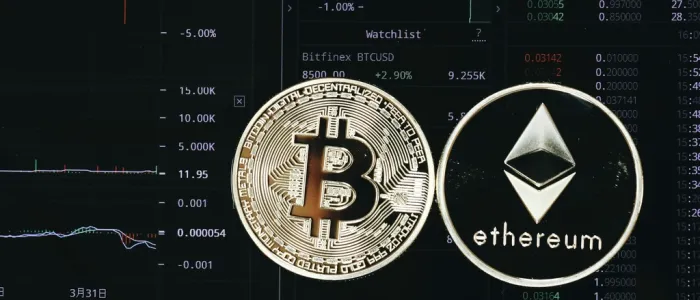
In the ever-evolving world of cryptocurrencies, few debates spark as much curiosity—and controversy—as the question: Can Ethereum overtake Bitcoin? This idea, known in crypto circles as the Flippening, refers to a hypothetical future moment when Ethereum’s market capitalization surpasses that of Bitcoin, making it the most valuable digital asset by total market value. While Bitcoin continues to reign as the original and dominant cryptocurrency, Ethereum has quietly (and sometimes not-so-quietly) built a compelling case for becoming the new king of the blockchain.
Bitcoin and Ethereum Serve Different Roles
To understand why the Flippening matters, we need to understand what’s being compared. Bitcoin is viewed primarily as a store of value, often described as “digital gold.” Its capped supply of 21 million coins, decentralized infrastructure, and consistent, conservative development make it a reliable hedge in uncertain times. It’s simple, secure, and widely accepted as the foundation of the crypto industry.
Ethereum, on the other hand, is a platform. It’s not just digital money; it’s programmable money. With smart contracts, dApps, NFTs, and an entire DeFi ecosystem built on top of it, Ethereum has transformed into the beating heart of decentralized innovation. ETH, the native token, powers everything from governance to gas fees. While Bitcoin sits still and stores value, Ethereum works constantly as the foundation for Web3.
What the Flippening Actually Measures
The Flippening isn’t just a fun term—it’s a metric that many track carefully. It refers specifically to Ethereum surpassing Bitcoin in market cap, which is calculated by multiplying the total supply of coins by their current price. At different moments in recent years, Ethereum has briefly approached Bitcoin’s market cap, especially during periods when Ethereum-based sectors like NFTs or DeFi exploded in popularity. While Bitcoin has consistently maintained the lead, the gap has been narrowing.
One of the major reasons why people believe the Flippening is possible is Ethereum’s pace of innovation. Since its 2022 transition to proof-of-stake via the Merge, Ethereum has not only become far more energy efficient than Bitcoin but has also introduced token-burning mechanisms that make ETH deflationary over time. These developments enhance Ethereum’s monetary properties, reducing new ETH issuance and making it increasingly attractive as a long-term investment.
Ethereum Flexibility Across Use Cases
Ethereum’s flexibility is also key. Its ability to support everything from stablecoins to gaming platforms, prediction markets to DAOs, makes it useful in a way Bitcoin has never aimed to be. This utility gives ETH intrinsic demand that isn’t purely speculative, it’s also functional. Every transaction, every smart contract, every NFT mint requires ETH to work. That kind of network usage creates a strong base layer of economic activity.
Still, Bitcoin has significant advantages. Its simplicity is its strength, making it easier to understand, harder to exploit, and more politically resilient. Bitcoin has also become the preferred asset among institutions entering the crypto space, thanks to its regulatory clarity and long history of performance. While Ethereum may be the more dynamic asset, Bitcoin remains the more stable one.
Two Networks Growing Side by Side
But it’s important to realize that the Flippening, if it ever happens, wouldn’t necessarily mean that Bitcoin has failed. Instead, it might reflect a shift in how people use blockchain technology. It would signal that utility, not just scarcity, is increasingly valued in the digital asset space. In that sense, Ethereum wouldn’t replace Bitcoin, but rather redefine what it means to lead.
As of now, Ethereum continues to trail Bitcoin in market cap, but it often leads in metrics like transaction volume, active addresses, and developer activity. Whether the Flippening happens in 2025 or never at all, the rising dominance of ETH highlights a broader trend: that crypto is no longer just about holding digital gold—it’s about building the future of the internet.