The global manufacturing sector is undergoing a transformation that is creating significant opportunities across the precision machining industry. Two materials stand at the center of this shift—aluminum and copper alloys—and the companies that have mastered their machining are positioned to capture substantial growth as electrification, lightweighting, and supply chain resilience reshape industrial demand.
The numbers tell a compelling story. The precision turned product manufacturing market is expected to grow from USD 121.05 billion in 2025 to USD 172.31 billion by 2031, representing a compound annual growth rate of 6.06 percent. The broader precision machining market, valued at approximately USD 123.54 billion in 2025, is projected to reach USD 228.75 billion by 2033. This growth is not driven by volume alone—it reflects a fundamental shift toward more complex, higher-tolerance components that require specialized machining capabilities.
Aluminum: The Lightweighting Engine
Aluminum has become the material of choice across multiple high-growth sectors. The global aluminum CNC machining services market was estimated at USD 3.57 billion in 2025 and is projected to grow at 7.2 percent annually. By 2032, the market is expected to reach approximately USD 5.81 billion, with some estimates suggesting even higher growth trajectories. What is driving this demand? Electric vehicles and aerospace lead the way. The automotive industry’s transition to electrification has dramatically increased aluminum content per vehicle. Pure electric vehicles now use approximately 292 kilograms of aluminum per vehicle, compared to around 206 kilograms for non-electric models. Battery trays, motor housings, structural frames, and cooling plates all increasingly specify aluminum alloys for weight reduction and structural rigidity.
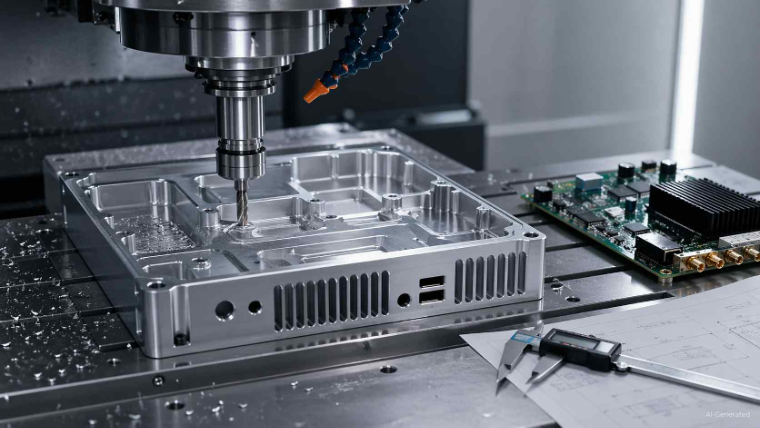
Aerospace lightweighting initiatives similarly push aluminum components toward thinner walls and more complex geometries. The push for greater fuel efficiency has made every gram count, and aluminum’s excellent strength-to-weight ratio makes it indispensable for both commercial and defense applications. At the same time, the electronics industry relies on aluminum for enclosures and heat sinks, where the material’s thermal conductivity and electromagnetic shielding properties are essential. Medical device manufacturers also specify aluminum for instrument housings and surgical tools that must be both lightweight and durable.
But aluminum is not as forgiving as many assume. High-speed machining at elevated spindle speeds demands careful chip evacuation to prevent recutting and surface defects. Thermal expansion, while less severe than with harder alloys, still requires compensation on precision features. Different aluminum alloys behave differently under cutting forces—6061 machines differently than 7075, and each grade demands specific speeds, feeds, and tooling strategies. Shops that have developed robust high-speed machining protocols deliver better surface finishes and tighter dimensional control. For companies sourcing critical aluminum components, finding a quality precision aluminum machining partner is essential to ensure consistent quality across production runs.
Copper and Brass: The Conductors of Electrification
While aluminum enables lightweighting, copper and brass enable electrification. The copper alloy market was valued at USD 158.84 billion in 2025 and is projected to reach USD 239.45 billion by 2032, growing at a compound annual rate of 6.03 percent. What is driving this demand? Renewables, rail infrastructure, data centers, and electric vehicles all require high-conductivity components. Miniaturized electronics demand high-cycle mating reliability. And corrosive-service applications increasingly specify non-ferrous materials where life-cycle value outweighs initial cost.
Copper and brass alloys are indispensable across automotive, electronics, telecommunications, and fluid power sectors. Electrical connectors, RF components, valve bodies, heat exchangers, and sensor housings all rely on these materials. In electric vehicles, copper content is significantly higher than in internal combustion vehicles—the typical EV contains approximately 80 kilograms of copper, compared to about 23 kilograms in a conventional car. This difference reflects the extensive wiring, busbars, and motor windings required for electric powertrains.
For precision machining providers, copper and brass present distinct challenges. Copper is gummy—it tends to smear rather than shear cleanly, producing long, stringy chips that can wrap around tools and interfere with automated operations. Brass, while more machinable, still demands sharp tooling and adequate chip evacuation to prevent surface galling. A poorly machined brass fitting can compromise an entire fluid control system. A copper connector with rough surface finish may fail under vibration in mission-critical telecommunications networks. Suppliers that have documented process libraries for copper alloys deliver consistent results. That is why procurement specialists look for a reliable source for high quality brass and copper machining—one that has already solved the challenges that catch less experienced shops off guard.
The Bigger Picture: Supply Chain Resilience
These material and machining dynamics are unfolding within a larger supply chain transformation. Regionalization and reshoring are not short-term trends but long-term structural changes. Companies are increasingly combining multiple production locations to achieve higher resilience, shorter delivery times, and less dependence on any single region.
In the United States, reshoring activity has accelerated dramatically, with 48 percent of organizations reporting reshoring investments—up from 30 percent in 2025. In Europe, reshoring has risen from 34 percent to 42 percent. Strategic control over critical supply chains has become a competitive necessity. However, the U.S. faces a projected deficit of 2.1 million manufacturing roles by 2030, with precision machining topping the hard-to-hire list. This shortage has created a premium for shops that have invested in skilled workforces, multi-axis Swiss-type machining, automated quality control, and lights-out production capabilities.
Looking Ahead
The companies best positioned to succeed in this environment are those that have made sustained investments in equipment, process knowledge, and workforce development. For procurement professionals and engineering leaders, the evaluation criteria have sharpened accordingly. Equipment matters—multi-axis CNC turning centers with live tooling, automated bar feeders, and in-process probing are now the baseline for serious work. Material experience matters—a shop that has produced tens of thousands of aluminum, brass, or copper components understands the subtle behaviors that separate reliable production from costly scrap. Quality infrastructure matters—certifications such as ISO 13485 for medical components and AS9100 for aerospace require documented processes, internal audits, and continuous improvement.
In an era where every component matters, the ability to machine aluminum, brass, and copper to exacting specifications has become a strategic differentiator. The manufacturers that have mastered these materials—and the supply chain partners that rely on them—will be best positioned to lead their industries in the years ahead.